
Ruminations VI
this one is for my ladies

Welcome back, friends. Happy Women’s History Month. A good while ago I listened to an episode of Radiolab (love you Jad Abumrad, now a professor at Vanderbilt!) all about menopause, and it was quite revealing. I will keep it a buck with you, dear readers: before listening, I basically knew nothing about menopause. I understood it as a transition period of fertility in females where estrogen declines and is characterized by hot flashes, mood changes, among other things. But beyond that, I knew nothing. And I'll admit I'm a tad embarrassed to say that, given it is literally one of the most universal experiences for over half of Earth's population.
And science is not doing much to help this lack of information. That's not to avoid some accountability, I have the capacity to learn things on my own, but the dissemination of knowledge pertaining to menopause is few and far between. Menopause has been and continues to be among the least studied physiological experiences. Less than 1% of published preclinical aging studies consider menopause in their experimental design, despite the fact that menopause influences over 70% of top aging-related diseases. Particularly since women's health has been neglected in research for decades, menopause sits squarely in a hazy field of understanding in our world. And that truly sucks for women.

Yeah yeah, performative white male saying how much menopause sucks for women, doofus. I will never understand what that is like for people to go through, but I wanted to share some of the fascinating things I learned. And the journey I will take you on spans from killer whale shit, a chimp named Garbo, and why Japanese women barely get hot flashes. The story primarily involves a theory reframing the second half of female life not as "decline" but as an evolutionary design.
Before diving into the whale shit, we should take a look at why menopause is scientifically strange. The whole point of evolution is to get your traits and DNA to little versions of you in the next generation. Traits that help you reproduce more are likelier to get passed on. Traits that don't tend to fade out.
By that logic, females should reproduce until they die. Okay pause, I am not Mr. Pronatalist Elon Musk when I say that, that's just what natural selection would suggest. This is the case for the roughly 6,500 species of mammals, with only a few known exceptions. Humans, our chimpanzee cousins, and a handful of whale species do something different: living for decades after the reproductive system has shut down. Biologists call this a substantial post-reproductive lifespan, which is a weird way to say you stopped making babies and yet you're still around.
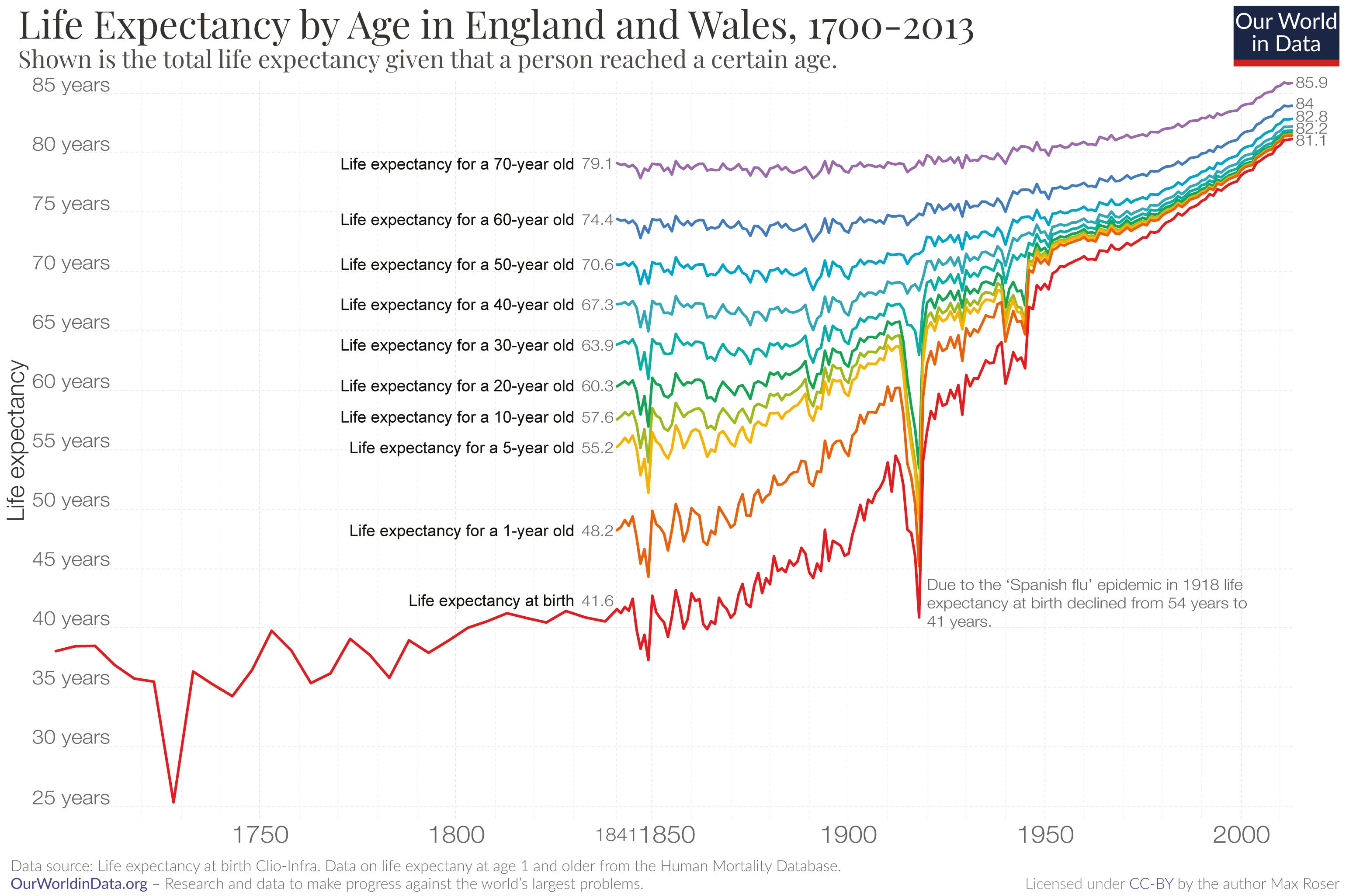
An early theory for this phenomenon was that modern medicine was just keeping women alive longer than nature planned, and that in ancient times women died around the age of menopause. This is not the case. Researchers have found that in hunter-gatherer populations and preindustrial societies, women who survived childhood would not uncommonly live to 60 or 70 years old. The average life expectancy from historical records looks so short because of an insanely high death toll from childhood illness and complications in childbirth. But when we look at survival ages past childhood, life expectancy jumps up significantly for as far back as we can look.
So then that theory is a crock of poo. Back to the drawing board. Let's take a look at the biology of perimenopause and see what's going on. For humans, typically in the mid-40s, estrogen and progesterone start to fluctuate wildly and then drop. The most iconic symptom, the hot flash, is very strange. For years the causes were unknown. Naomi Rance, a professor at the University of Arizona, identified KNDy neurons in the hypothalamus, which contain estrogen receptors and appear to regulate thermoregulation linked to hot flashes.
The burgeoning growth of neuroendocrinology during this time also helped explain symptoms of brain fog in perimenopausal women, given that the prefrontal cortex contains high densities of estrogen receptors. Dr. Lisa Mosconi, director of the Women's Brain Initiative at Weill Cornell, describes menopause as a neurological transition as much as a reproductive one. Imaging studies show perimenopausal women experience structural brain changes, including temporary gray matter reductions in regions associated with memory and emotional regulation. Around 70% of women report memory complaints during menopause, peaking around ages 50–54.
![Depiction of Gray and White Matter in the Brain [IMAGE] | EurekAlert! Science News Releases](https://substackcdn.com/image/fetch/$s_!4nwm!,f_auto,q_auto:good,fl_progressive:steep/https%3A%2F%2Fsubstack-post-media.s3.amazonaws.com%2Fpublic%2Fimages%2F6f7e2b02-bc6e-443a-8ff7-129f95317c0d_481x338.jpeg "Depiction of Gray and White Matter in the Brain [IMAGE] | EurekAlert! Science News Releases")
But another fascinating point: many of these neurological changes stabilize or partially reverse post-menopause. Gray matter has been shown to partially recover, revealing a reorganization of tissue rather than degradation, much like synaptic pruning during puberty. Sadly, the menopausal transition appears to coincide with the preclinical phase of Alzheimer's disease, and women account for roughly two-thirds of Alzheimer's patients. The link between the two is complex and still under investigation.
The physiological experience of menopause is wildly variable, which brings us to global differences. Japanese women report hot flashes at dramatically lower rates than women in North America and Europe: roughly 12% versus ~70%. Anthropologist Margaret Lock studied menopause across cultures and noted that Japanese women often report shoulder stiffness as the most common symptom rather than hot flashes. Not only that, but Japanese women report that their most common symptom is shoulder stiffness, which is barely reported in Western surveys. In Japan, the menopausal transition is called konenki, roughly translating to a combination of "renewal," "season," and "energy." In Western contexts menopause is often framed as decline, whereas the Japanese framework views it more as an adjustment of the body's equilibrium.
Part of this may be explained by diet. Soy contains isoflavones, plant compounds that weakly mimic estrogen, and studies have found that soy consumption can reduce hot flashes. Cultural attitudes likely play a role as well: research suggests women with more negative expectations about menopause often report more severe symptoms.
So all that to say: we are still pretty dumbfounded about much of how this works. Now enter: the poop boat. For decades scientists assumed that menopause, specifically long post-reproductive lifespan, was uniquely human. Then came killer whales.
Researchers studying orca populations in the Pacific Northwest noticed that female killer whales stopped reproducing around age 40 but could live into their 80s or 90s. Researchers began using fecal hormone analysis to study whale physiology non-invasively. For animals like orcas, this was a massive shift in studying their biology, so Sam and colleague Dr. Deborah Giles began collecting doo.
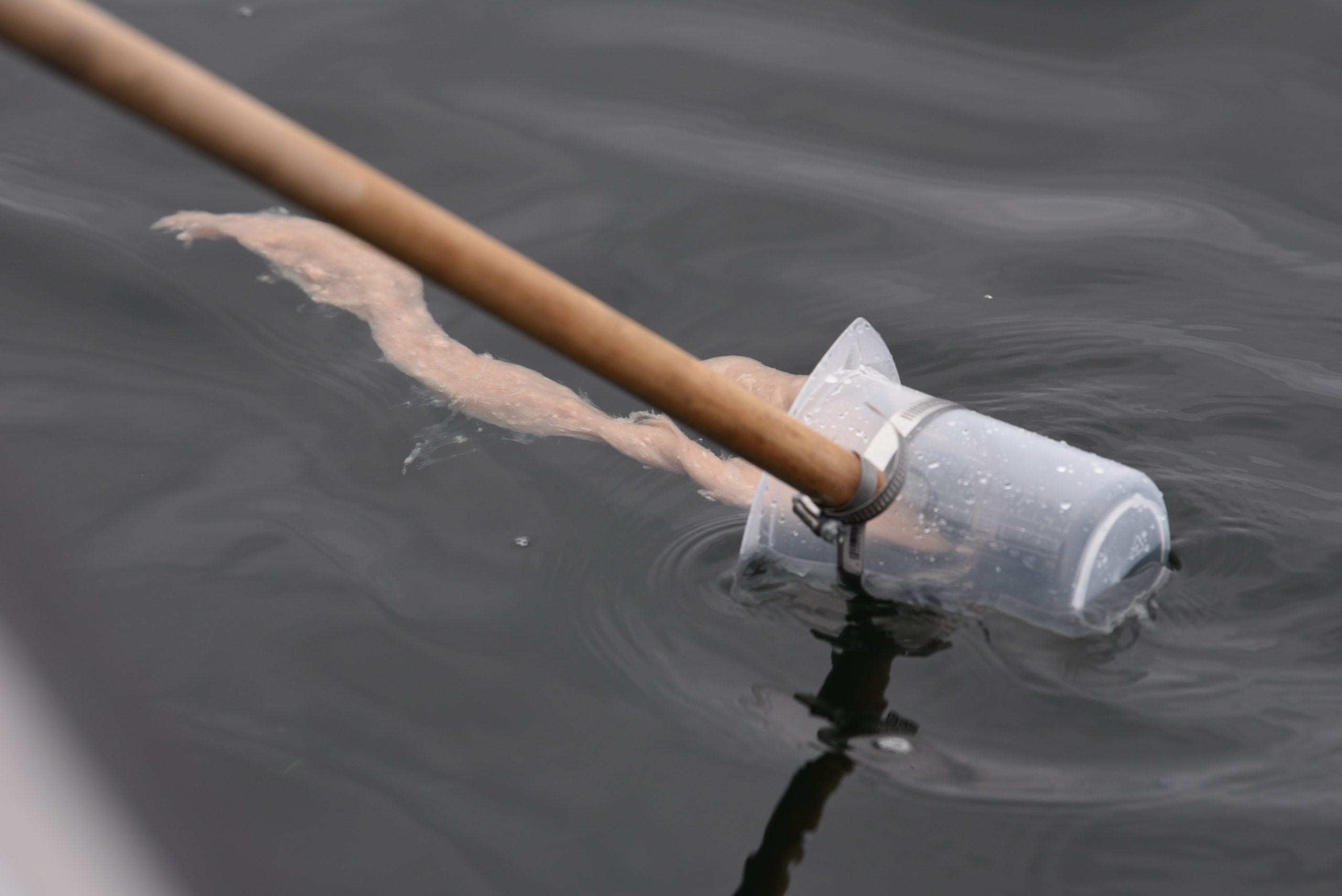
The process goes like this, Giles goes out on a boat, follows the pod at a distance, and waits. Her research assistant, a former street dog from Sacramento named Iber, begins sniffing air from the bow, detects a scent, and leads the team to the sample. The scat, described as the consistency of thick pancake batter, floats to the surface.
Through studying hormonal changes in their shit, the crew verifies the orcas are indeed living well past menopause. Recently, a group of researchers from University of Exert confirmed that at least five whale species, including orcas and narwhals, share this trait: a feature that developed independently in at least two mammalian groups, primates and cetaceans. What might we have in common? We are both long-lived, highly social, cognitively sophisticated, and matrilineal mammals. Orcas live in tight knit communities where accumulated knowledge matters greatly, where an experienced old female who no longer reproduces could provide enormous value to her group, particularly in hunting grounds.
This case of the chimpanzee is actually newer, and honestly more complicated. The Ngogo chimpanzee community in Uganda, founded by Jane Goodall (God rest her soul), put out research in 2023 confirming that wild chimpanzees experience menopause around the age of 50, similar to humans. A female named Garbo was the center of the study. She already had three sons and her ovarian activity had ceased; yet, she remained an active, central member of the community. Her case provided some resistance to the longstanding Grandmother Hypothesis. The theory, first formalized by anthropologist Kristen Hawkes in the 1990s, posits that menopause evolved because grandmothers who stopped reproducing and redirected all their energy toward feeding and caring for grandchildren produced more surviving descendants than those who kept having babies until they died. It’s an elegant idea, and the human and orca data support it strongly.

But chimps complicate it. Female chimps disperse from their birth community at sexual maturity, meaning Garbo likely wasn’t living near her daughters, let alone feeding her grandchildren. If grandmothering were the whole story, you’d expect the trait to appear only in species where grandmothers actually grandmother, but Hawke’s hypothesis is still observed in the previously discussed species.
What her case suggests instead is that the value of a post-reproductive female may not always be about childcare. It may be about something harder to measure: accumulated knowledge, social authority, and/or group stability. She really is providing some wisdom to these future generations. Garbo wasn’t valuable because she was babysitting. She was valuable because she was Garbo.
The Grandmother Hypothesis was formalized when Hawkes was studying the Hadza people in Tanzania. She was struck, as she put it, by within the group of hunter-gatherers "how productive these old ladies were" at foraging for food.” Her findings were that grandmothers who foraged actively allowed their daughters to have children faster, because the grandmother was providing supplemental food to weaned grandchildren. This freed up the daughter to get pregnant again sooner. If we run with this logic, women who had the genetic makeup for longer post-menopausal living produced more grandchildren carrying that longevity gene. This leads us to believe that over many generations, a long post-reproductive lifespan was selected evolutionarily.
Studies of pre-industrial populations have added remarkable detail as well. Using 17th-century parish records from Quebec, where French Catholic priests recorded every birth, marriage, and death, and Finnish population data, researchers found that daughters who lived within walking distance of their mothers had significantly more children, and those children survived at higher rates. I really find it interesting, that the traits that make us human like social complexity, accumulated knowledge, and community are the conditions under which a long post-fertile life becomes a winning strategy evolutionarily.
The frustrating part of all this is how recent and how little we are understanding the condition of menopause. Every single woman who lives to midlife goes through this transition. And yet medical science has historically operated on what Dr. Nannette Wenger calls “bikini medicine.” It’s the assumption that women are essentially smaller men with different reproductive organs, and that the reproductive parts are all that distinguish us. Hot flashes? Hormones. Depression? Probably just hormones. Bone loss, cardiovascular changes, brain fog, sleep disruption? Hormones.
Women of reproductive age were explicitly excluded from most clinical research until the 1990s. The NIH’s landmark Study of Women’s Health Across the Nation (SWAN) enrolled over 3,300 women in 1994 and has been tracking them for decades. It was revolutionary for women’s health, and has given us most of what we know about how menopause progresses across different racial and ethnic groups. Black women, for instance, experience hot flashes more frequently and with greater intensity than white or Asian women; menopause onset varies by background, body type, and access to care.
So, as Garbo, the Japanese and their Hadza, and the orcas all know, menopause is not a malfunction. It is feature refined over hundreds of thousands of years, shared by the most socially complex, cognitively sophisticated, long-lived mammals on the planet. Does this make any of the experiences and symptoms of menopause more manageable? No not at all, they deserve continued research for supporting the female population, love y’all.
You rock!